

Figr AI
Last updated:
Figr AI is an innovative design agent that leverages artificial intelligence to deeply understand a product's context and generate production-ready user experience (UX) designs. It goes beyond simple wireframing by incorporating comprehensive inputs like industry benchmarks, user feedback, product flow, and existing design systems. This tool aims to transform the UX design process, making it faster, more consistent, and data-driven for product teams. By synthesizing vast amounts of information, Figr AI delivers high-fidelity designs backed by real-world application patterns, ensuring relevance and effectiveness.
What It Does
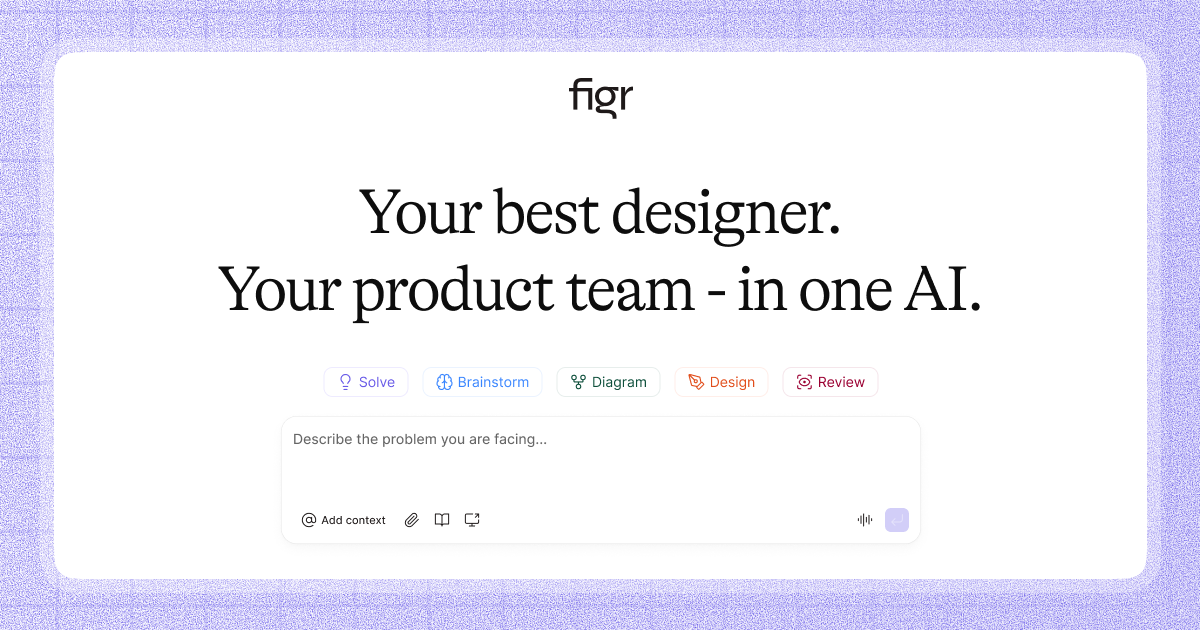
Figr AI functions as an intelligent design assistant that takes diverse contextual inputs, including user research, competitor analysis, and existing design guidelines. It processes this information to understand the product's unique requirements and user needs. The AI then generates detailed, production-ready UX designs that are not just conceptual, but actionable and aligned with established app patterns. This iterative process allows for continuous refinement and optimization of designs based on evolving data.
Pricing
Core Value Propositions
Accelerated Design Iteration
Significantly speeds up the UX design process by generating production-ready designs quickly. This allows teams to test and launch new features much faster.
Data-Driven UX Decisions
Ensures all design outputs are backed by real industry benchmarks, user feedback, and proven patterns. This minimizes guesswork and maximizes design effectiveness.
Enhanced Design Consistency
Maintains brand and system coherence effortlessly by integrating with existing design systems. This reduces design debt and ensures a unified user experience across the product.
Reduced Design Debt
Minimizes rework and ensures scalable design solutions by generating designs that are consistent, well-structured, and informed by best practices from the outset.
Use Cases
Rapid Feature Prototyping
Quickly generate diverse design options for new features or product iterations, allowing for faster validation and stakeholder review.
Optimizing User Flows
Redesign and improve existing product flows by feeding in user feedback and analytics, leading to more intuitive and efficient user journeys.
Ensuring Design System Adherence
Automatically produce new designs that strictly follow an organization's design system, ensuring brand consistency and reducing manual checks.
Competitive UX Benchmarking
Generate UX patterns and designs informed by industry benchmarks and competitor analysis, helping products stay competitive and innovative.
Translating User Feedback
Directly translate qualitative and quantitative user feedback into specific UI/UX design modifications, making the design process truly user-centric.
Technical Features & Integration
Contextual AI Understanding
Processes diverse inputs like user feedback, product flows, and industry benchmarks to deeply understand product requirements and user needs. This ensures generated designs are highly relevant and informed.
Production-Ready UX Generation
Generates high-fidelity, actionable UX designs, not just abstract concepts or wireframes. These outputs are ready for development, significantly streamlining the hand-off process.
Design System Integration
Automatically adheres to existing design systems and brand guidelines, maintaining consistency across all design outputs. This helps in scaling design efforts without compromising brand identity.
Real App Pattern Library
Leverages a comprehensive library of proven UI/UX patterns from successful applications. This ensures that generated designs are not only innovative but also practical and familiar to users.
Continuous Design Optimization
Adapts and refines designs based on new inputs and evolving product data. This iterative capability supports ongoing product development and ensures designs remain effective over time.
User Feedback Analysis
Directly incorporates qualitative and quantitative user feedback into the design process. This feature ensures that design decisions are user-centric and address real pain points.
Target Audience
Figr AI is ideal for product designers, UX researchers, product managers, and development teams operating within fast-paced environments, particularly in SaaS and tech companies. It caters to those looking to accelerate design cycles, improve design consistency, and make more data-driven decisions. Teams struggling with design debt or slow iteration processes will find significant value.
Frequently Asked Questions
Figr AI is a paid tool.
Figr AI functions as an intelligent design assistant that takes diverse contextual inputs, including user research, competitor analysis, and existing design guidelines. It processes this information to understand the product's unique requirements and user needs. The AI then generates detailed, production-ready UX designs that are not just conceptual, but actionable and aligned with established app patterns. This iterative process allows for continuous refinement and optimization of designs based on evolving data.
Key features of Figr AI include: Contextual AI Understanding: Processes diverse inputs like user feedback, product flows, and industry benchmarks to deeply understand product requirements and user needs. This ensures generated designs are highly relevant and informed.. Production-Ready UX Generation: Generates high-fidelity, actionable UX designs, not just abstract concepts or wireframes. These outputs are ready for development, significantly streamlining the hand-off process.. Design System Integration: Automatically adheres to existing design systems and brand guidelines, maintaining consistency across all design outputs. This helps in scaling design efforts without compromising brand identity.. Real App Pattern Library: Leverages a comprehensive library of proven UI/UX patterns from successful applications. This ensures that generated designs are not only innovative but also practical and familiar to users.. Continuous Design Optimization: Adapts and refines designs based on new inputs and evolving product data. This iterative capability supports ongoing product development and ensures designs remain effective over time.. User Feedback Analysis: Directly incorporates qualitative and quantitative user feedback into the design process. This feature ensures that design decisions are user-centric and address real pain points..
Figr AI is best suited for Figr AI is ideal for product designers, UX researchers, product managers, and development teams operating within fast-paced environments, particularly in SaaS and tech companies. It caters to those looking to accelerate design cycles, improve design consistency, and make more data-driven decisions. Teams struggling with design debt or slow iteration processes will find significant value..
Significantly speeds up the UX design process by generating production-ready designs quickly. This allows teams to test and launch new features much faster.
Ensures all design outputs are backed by real industry benchmarks, user feedback, and proven patterns. This minimizes guesswork and maximizes design effectiveness.
Maintains brand and system coherence effortlessly by integrating with existing design systems. This reduces design debt and ensures a unified user experience across the product.
Minimizes rework and ensures scalable design solutions by generating designs that are consistent, well-structured, and informed by best practices from the outset.
Quickly generate diverse design options for new features or product iterations, allowing for faster validation and stakeholder review.
Redesign and improve existing product flows by feeding in user feedback and analytics, leading to more intuitive and efficient user journeys.
Automatically produce new designs that strictly follow an organization's design system, ensuring brand consistency and reducing manual checks.
Generate UX patterns and designs informed by industry benchmarks and competitor analysis, helping products stay competitive and innovative.
Directly translate qualitative and quantitative user feedback into specific UI/UX design modifications, making the design process truly user-centric.





Get new AI tools weekly
Join readers discovering the best AI tools every week.