

Spectate
Last updated:
Spectate is an AI-powered monitoring and incident management platform designed to help modern teams prevent, detect, and resolve operational incidents swiftly. It leverages artificial intelligence for intelligent alerting, anomaly detection, root cause analysis, and automated incident response, significantly reducing downtime and improving system reliability. The platform integrates seamlessly with existing tech stacks, offering a comprehensive solution for SREs, DevOps, and IT operations teams.
What It Does
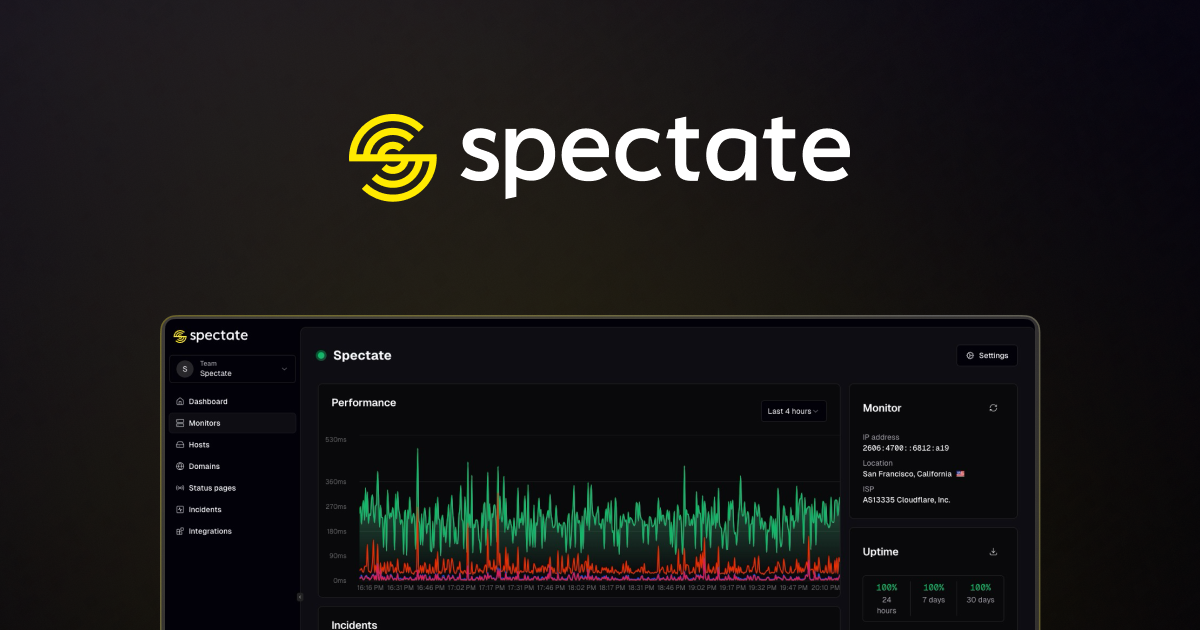
Spectate provides end-to-end incident lifecycle management by continuously monitoring systems, applications, and infrastructure. It uses AI to identify anomalies, correlate alerts, and predict potential issues before they impact users. Upon detection, it triggers intelligent alerts, automates response workflows, facilitates on-call management, and provides public or private status pages to keep stakeholders informed.
Pricing
Pricing Plans
A perpetual free plan for small teams to get started with basic monitoring and incident management capabilities.
- Up to 3 users
- 1 status page
- Basic monitoring
- 100 alerts/month
Designed for growing teams needing comprehensive incident management, unlimited usage, and advanced features.
- Unlimited users
- Unlimited status pages
- Advanced monitoring
- Unlimited alerts
- On-call management
- +1 more
Tailored for large organizations requiring enterprise-grade security, dedicated support, and custom solutions.
- All Team features
- SSO
- Dedicated support
- Custom integrations
- Advanced security
- +1 more
Core Value Propositions
Proactive Incident Prevention
AI-powered anomaly detection and predictive insights help identify and address issues before they impact users, reducing downtime.
Accelerated Incident Resolution
Intelligent alerting, AI-assisted root cause analysis, and automated response playbooks dramatically cut down Mean Time To Resolution (MTTR).
Reduced Alert Fatigue
Smart alert correlation and noise reduction ensure that teams only receive actionable notifications, improving focus and productivity.
Enhanced Operational Efficiency
Automated workflows for response, on-call management, and post-incident analysis free up valuable engineering time and reduce manual overhead.
Use Cases
Monitoring SaaS Application Health
Continuously monitors critical SaaS application metrics and logs, instantly alerting teams to performance issues or outages to minimize user impact.
Automating Incident Response Workflows
Triggers automated remediation scripts or actions based on specific alert conditions, streamlining initial incident handling without human intervention.
Managing On-Call Schedules
Organizes on-call rotations and escalation policies, ensuring that the right engineer is notified and responsible for incidents 24/7.
Communicating Service Status Publicly
Maintains a transparent public status page to inform customers about service health, ongoing incidents, and scheduled maintenance.
AI-Assisted Root Cause Analysis
Uses AI to analyze incident data, helping engineers quickly identify the underlying causes of complex system failures and prevent recurrence.
Reducing Alert Noise for DevOps Teams
Correlates numerous alerts from different systems into actionable incidents, reducing alert fatigue for DevOps and SRE teams.
Technical Features & Integration
AI-Powered Anomaly Detection
Identifies unusual patterns and potential issues in metrics and logs before they escalate, leveraging AI for proactive incident prevention.
Intelligent Alerting & Routing
Reduces alert fatigue by correlating events, dynamically setting thresholds, and routing notifications to the right on-call personnel via preferred channels.
Automated Incident Response
Enables creation and execution of automated playbooks to remediate common issues, speeding up resolution and minimizing manual intervention.
On-Call Management
Manages schedules, rotations, and escalation policies, ensuring critical alerts are always handled by the appropriate team member.
Customizable Status Pages
Provides public and private status pages for transparent communication about system health and ongoing incidents to users and internal teams.
Root Cause Analysis (AI-Assisted)
Assists teams in quickly pinpointing the underlying causes of incidents, accelerating diagnosis and preventing recurrence.
Extensive Integrations
Connects with over 100 popular tools for monitoring, communication, and infrastructure, centralizing data and workflows.
Post-Incident Automation
Automates the generation of post-mortem reports and analysis, facilitating continuous improvement without manual overhead.
Target Audience
This tool is ideal for SREs, DevOps engineers, IT operations teams, and developers in modern tech organizations, particularly those managing complex distributed systems and cloud-native applications. It's built for teams seeking to improve system reliability, reduce Mean Time To Resolution (MTTR), and streamline their incident management workflows.
Frequently Asked Questions
Spectate offers a free plan with limited features. Paid plans are available for additional features and capabilities. Available plans include: Free Forever, Team, Enterprise.
Spectate provides end-to-end incident lifecycle management by continuously monitoring systems, applications, and infrastructure. It uses AI to identify anomalies, correlate alerts, and predict potential issues before they impact users. Upon detection, it triggers intelligent alerts, automates response workflows, facilitates on-call management, and provides public or private status pages to keep stakeholders informed.
Key features of Spectate include: AI-Powered Anomaly Detection: Identifies unusual patterns and potential issues in metrics and logs before they escalate, leveraging AI for proactive incident prevention.. Intelligent Alerting & Routing: Reduces alert fatigue by correlating events, dynamically setting thresholds, and routing notifications to the right on-call personnel via preferred channels.. Automated Incident Response: Enables creation and execution of automated playbooks to remediate common issues, speeding up resolution and minimizing manual intervention.. On-Call Management: Manages schedules, rotations, and escalation policies, ensuring critical alerts are always handled by the appropriate team member.. Customizable Status Pages: Provides public and private status pages for transparent communication about system health and ongoing incidents to users and internal teams.. Root Cause Analysis (AI-Assisted): Assists teams in quickly pinpointing the underlying causes of incidents, accelerating diagnosis and preventing recurrence.. Extensive Integrations: Connects with over 100 popular tools for monitoring, communication, and infrastructure, centralizing data and workflows.. Post-Incident Automation: Automates the generation of post-mortem reports and analysis, facilitating continuous improvement without manual overhead..
Spectate is best suited for This tool is ideal for SREs, DevOps engineers, IT operations teams, and developers in modern tech organizations, particularly those managing complex distributed systems and cloud-native applications. It's built for teams seeking to improve system reliability, reduce Mean Time To Resolution (MTTR), and streamline their incident management workflows..
AI-powered anomaly detection and predictive insights help identify and address issues before they impact users, reducing downtime.
Intelligent alerting, AI-assisted root cause analysis, and automated response playbooks dramatically cut down Mean Time To Resolution (MTTR).
Smart alert correlation and noise reduction ensure that teams only receive actionable notifications, improving focus and productivity.
Automated workflows for response, on-call management, and post-incident analysis free up valuable engineering time and reduce manual overhead.
Continuously monitors critical SaaS application metrics and logs, instantly alerting teams to performance issues or outages to minimize user impact.
Triggers automated remediation scripts or actions based on specific alert conditions, streamlining initial incident handling without human intervention.
Organizes on-call rotations and escalation policies, ensuring that the right engineer is notified and responsible for incidents 24/7.
Maintains a transparent public status page to inform customers about service health, ongoing incidents, and scheduled maintenance.
Uses AI to analyze incident data, helping engineers quickly identify the underlying causes of complex system failures and prevent recurrence.
Correlates numerous alerts from different systems into actionable incidents, reducing alert fatigue for DevOps and SRE teams.


Get new AI tools weekly
Join readers discovering the best AI tools every week.